


Every founder wants competitive advantage. Most look for it in the wrong places.
Better product. Lower price. More features. These are real sources of advantage. But they are expensive to build and easy to copy.
The businesses that sustain growth over time are not always the ones with the best product. They are the ones that consistently make better decisions.
What Better Decisions Actually Means
Better decisions does not mean smarter people or more analysis. It means a consistent way of getting to higher-quality choices, with less friction, and clearer accountability.
In practice, it comes down to four things:
Clarity about what you are deciding
Assumptions that are named and tested
Speed that matches the stakes
Ownership that is explicit
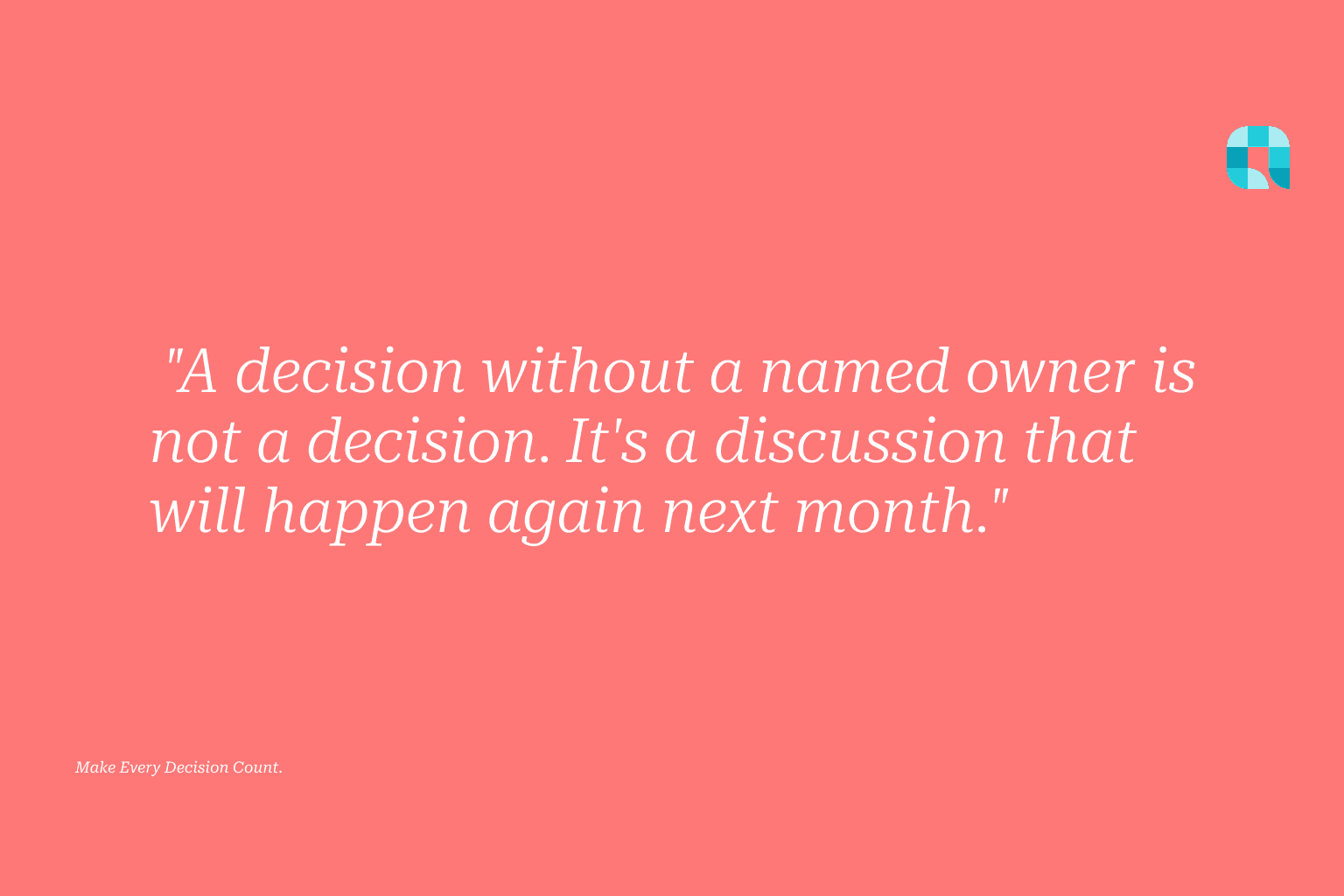
A decision without a named owner is not a decision. It is a discussion that will happen again next month.
Why This Matters More for SMBs
Large organisations can absorb bad decisions. They have resources to course-correct and time to wait out mistakes. SMBs do not have that buffer.
A bad hire. A wrong bet. A poorly timed launch. These compound quickly.
At the same time, SMBs have a structural advantage: speed. A 10-person business can decide and implement in a day what takes a 500-person company three months.
Speed is only an advantage if the decisions are good. Fast bad decisions are worse than slow ones. Fast good decisions are one of the most powerful advantages a small business has.
Where AI Fits Into This
AI does not make decisions for you. But it changes the economics of getting to better-informed decisions.
Scenario modelling that used to require a consultant. Competitive analysis that used to require a research team. Customer insight that used to take weeks.
The best use of AI is not automation for its own sake. It is raising the quality of inputs that inform your judgment.
The Compounding Return
Decision quality compounds. A business that consistently makes slightly better decisions than competitors does not just win individual moments. It builds momentum. Each good decision creates better options for the next.
Over 3–5 years, that compounding effect is the difference between growth and plateau.
Make every decision count.
Peter Falk is a Fractional CMO, AI Strategy Consultant, and founder of Orgentis — a strategic decision platform built for growing businesses. He partners with SMBs and owner-led companies to turn strategy into real growth. Based in Vancouver. Let’s talk.