



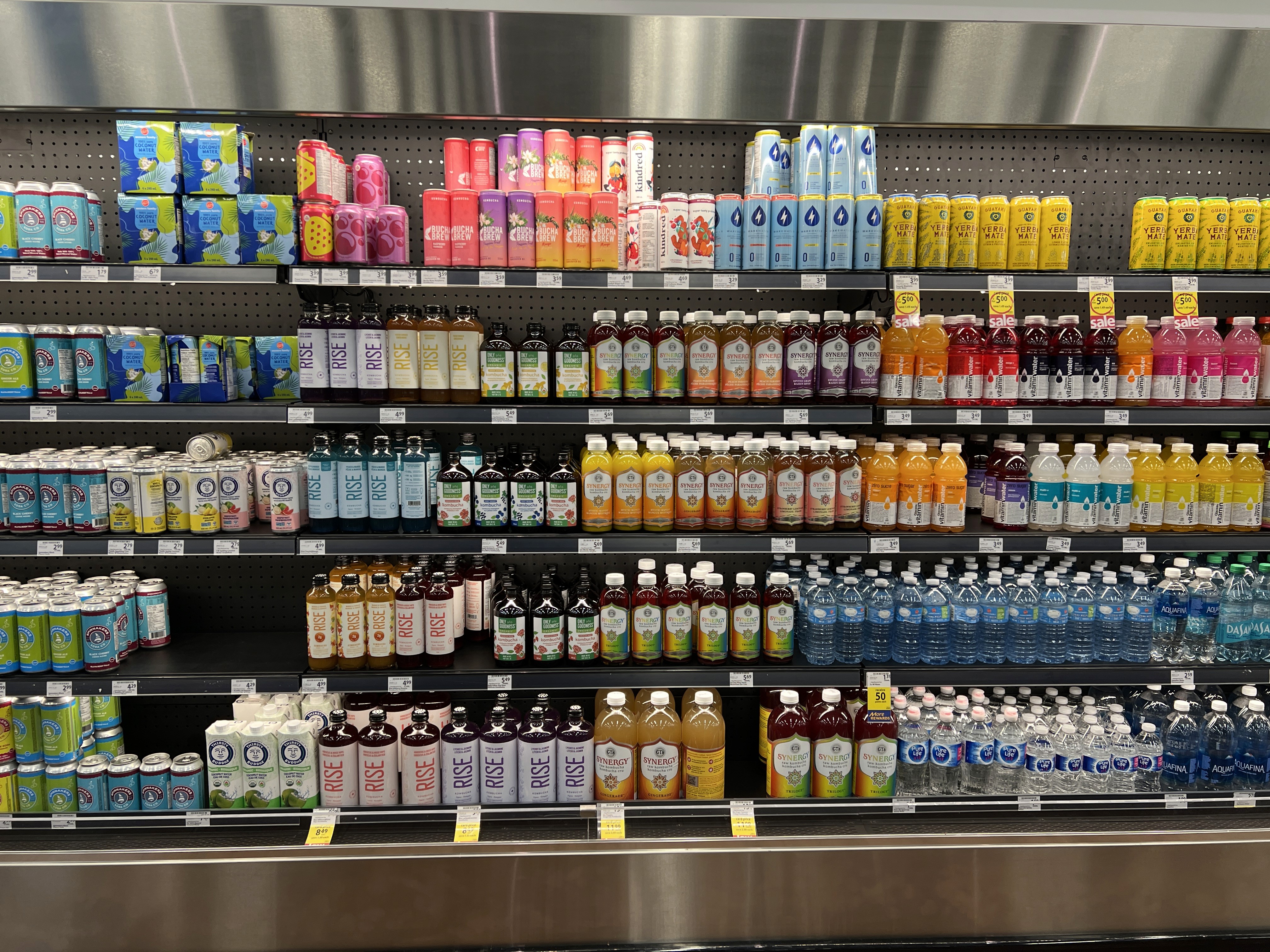
I’ve used LLMs chatbots like ChatGPT for all kinds of things—automation (Make.com, N8N), data cleanup, content generation. But one of the most memorable use cases came from a dead-simple client ask:
“We need a competitive pricing analysis for a new product in an FMCG category. There are a lot of brands.”
Instead of launching into web research (read: web scraping tool) or hunting down old spreadsheets, I went to the store. Stepped six feet back from the shelf. Snapped five photos. Captured 70+ SKUs across 15+ brands—retail price, sale price, product specs, all of it.
Uploaded the images to ChatGPT, prompted it to build a table: brand, product, volume, retail price, sale price, etc. Exported the results to a CSV. Cleaned it up in Sheets. Analyzed the data. Done and delivered.
This was over a year ago, and it broke my brain.
It was the first time I realized the right mix of curiosity and AI can outperform the typical approach.
AI unlocks a lot and you can move from question to clarity—fast. But it’s up to you to think differently, creatively, and use it to your advantage.
Why SMBs Overthink AI Implementation
There's a pattern I see constantly with growing businesses and AI. The leadership team knows AI is important. They've seen the case studies, read the reports, sat through the presentations. And then they do nothing — because the gap between "we should be using AI" and "here's exactly how we use AI in our business" feels too wide to cross.
That gap is almost entirely manufactured.
The grocery store pricing analysis I described took less than two hours from idea to deliverable. No API. No data pipeline. No AI team. Just a phone, a prompt, and the willingness to try something that felt slightly absurd.
That's the version of AI that's available to every SMB right now. And most businesses are waiting for the version that requires a six-month implementation plan.
The question isn't whether you have the infrastructure for AI. The question is whether you have the curiosity to experiment with what you already have access to.
Five Practical AI Use Cases for Business That Don't Require a Technical Team
These are the types of applications I've seen create immediate value for growing businesses:
Competitive research. Feed AI a competitor's website, pricing page, or marketing copy and ask it to identify positioning gaps and opportunities. What are they emphasizing that you're not? What are they avoiding that you could own?
Customer communication. Use AI to draft, refine, and personalize outbound emails, proposals, and follow-ups. The goal isn't to remove human judgment — it's to compress the time it takes to get to a high-quality first draft.
Meeting preparation. Before any significant client meeting or strategic discussion, feed AI the relevant context and ask it to identify the questions you should be asking, the assumptions you should be challenging, and the risks you might be underweighting.
Data interpretation. Upload a spreadsheet, a survey result, or a sales report and ask AI to tell you what's interesting, what's anomalous, and what questions the data raises. You don't need a data analyst to get a first-pass interpretation.
Decision stress-testing. Describe a decision you're about to make — including the assumptions behind it — and ask AI to argue the strongest case against it. This is the pre-mortem on demand.
The Real Unlock: Combining Judgment with Curiosity
The pricing analysis story isn't really about AI. It's about the willingness to look at a problem differently and reach for the tool that fits.
Most of the value SMBs leave on the table with AI isn't technical. It's attitudinal. The assumption that good work requires complex processes. The discomfort with trying something that might not work. The belief that if it was that simple, someone would already be doing it.
Someone is. Your competitors who figure this out first aren't building better AI systems. They're building a culture where experimentation is expected, where fast and imperfect beats slow and perfect, and where the measure of a good idea is whether it solves the problem — not whether it looks impressive.
AI is as useful as your willingness to experiment. You already have access to the tools. The question is whether you're willing to use them.
Peter Falk is a Fractional CMO and AI Strategy Consultant based in Vancouver, BC. He works with SMB founders and leadership teams across North America to pressure-test business strategy, validate growth assumptions, and build marketing that actually converts.